


Yesterday offered a stark reality check for the AI trade as every single stock in the Philadelphia Semiconductor Index closed in the red.
The sharpest hits landed directly on leverage-heavy infrastructure players, with CoreWeave, Nebius, and TeraWulf leading the sell-off. The catalyst? A Wall Street Journal report shedding light on how Big Tech’s sprawling AI commitments are increasingly kept off balance sheets. This aggressive buildout was engineered under the assumption of cheap capital. That era is officially over.
Meanwhile, Investment Grade (IG) bond sales are smashing monthly records. While Bloomberg framed this surge as a “best-ever” milestone, celebrating record-breaking corporate debt issuance is a dangerous misread of market conditions. The last time debt issuance spiked at this velocity was during the run-up to the 2008 subprime crisis.
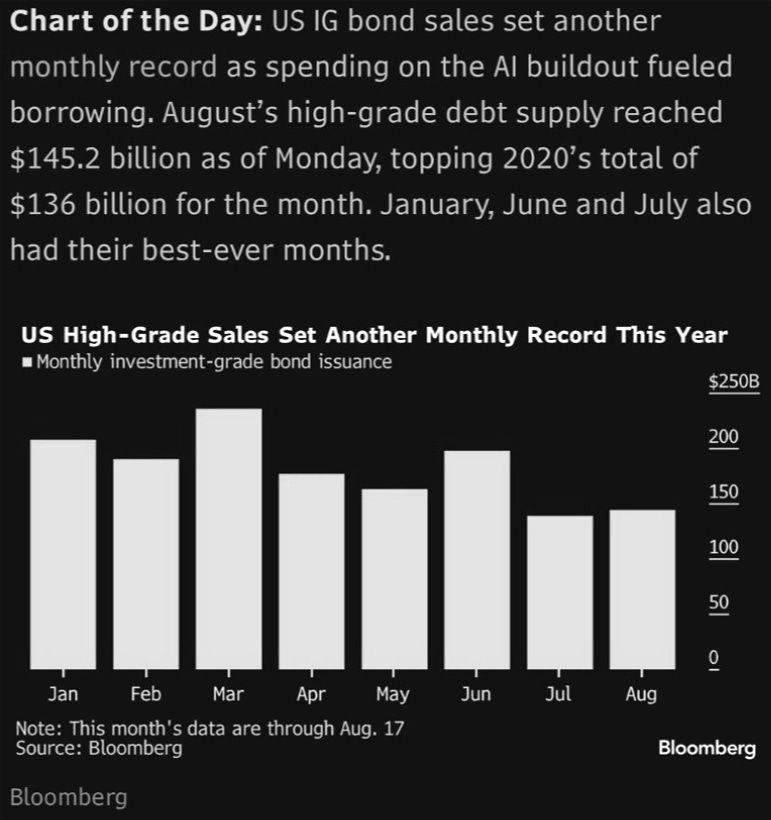
Capital is finite, and a borrowing spree of this scale forces issuers into a brutal rate war for liquidity. Making matters worse, corporate borrowers aren't just competing among themselves, they are bidding against governments that are also dumping record amounts of sovereign debt onto the market.
With central banks shifting from buyers of last resort to active quantitative tightening, the liquidity backstop has vanished. The result is plain to see: government bond yields have surged back to levels not witnessed since the Great Financial Crisis.
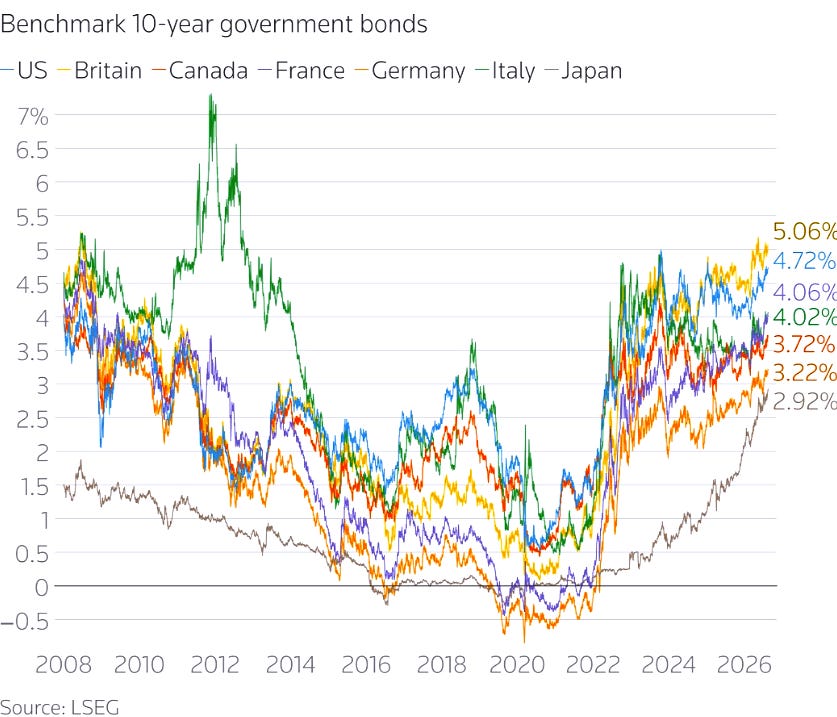
U.S. debt has breached the $40 trillion threshold for the first time, and investors are demanding greater compensation to absorb the rapidly growing borrowing needs of governments and corporates.
The AI narrative is colliding head-on with macroeconomic reality. For years, massive capital expenditure was masked by low interest rates and creative off-balance-sheet financing. Now, facing a perfect storm of tightening central bank balance sheets, record sovereign supply, and relentless corporate borrowing, the cost of capital is rapidly re-pricing. When cheap debt disappears, the market stops valuing pure promise and demands sustainable cash flow, leaving highly leveraged AI plays exposed to a painful structural reset.

