



DISCLAIMER & DISCLOSURE: The author does hold a position in the Kingsway Corporation at the date of publication, although that may change. The views expressed are those of the author and may change without notice. The author has no duty or obligation to update this information. Some content is sourced from third parties believed to be reliable, but accuracy is not guaranteed. Forward-looking statements involve assumptions, risks, and uncertainties, meaning actual outcomes may differ from those envisaged in this analysis. Past performance is not indicative of future results. All investments carry risk, including financial loss. This analysis is for educational purposes only and does not constitute investment advice or recommendations of any kind. Conduct your own research and seek professional advice before investing.
Acquisition-as-a-Business (AaaB)
This is now the eighth post in the AaaB series. If you missed the others, here are the links:
Relais Group investment analysis
Fairfax India (podcast/video presentation)
Topicus - Part 1 - this post
Topicus - Part 2 - How to value Topicus
Write up on Fairfax India to compliment (4) above
This post (Kingsway Corp)
Day after day, investors sift through endless data, company reports and market chatter, usually finding nothing truly valuable. But every so often, something special glimmers - a business that feels different, a hidden gem others haven’t noticed. In that moment, an investor feels a rush of blood to the head and a quickening of the pulse.
This was the situation in which I found myself recently.
At its heart, investing is about pattern recognition. By studying which businesses thrived in the past and understanding what made them successful, we learn to recognize familiar rhythms in new opportunities and those echoes can be powerful signals. Every so often, we encounter a company that sparks déjà vu, a moment where we think, “I’ve seen this movie before, and I know how it ends.”
Want to know more?
I thought you might!
Imagine stumbling upon an asset class that few people have heard of, one that has quietly delivered annual returns north of 30% for decades, yet until recently was the exclusive domain of private equity insiders. Now imagine discovering that, for the first time, there’s a way for public market investors to access this opportunity through a U.S. domiciled vehicle listed on the NYSE.
Digging deeper, you find a CEO who has been refining his playbook in this asset class for over twenty years, running the same disciplined strategy through multiple cycles, learning, iterating and compounding results. The process is now repeatable, measurable, and proven.
Then another layer emerges. Some of the sharpest minds in corporate management and capital allocation are not only shareholders but actively involved in an advisory capacity steering this business. The alignment of experience, skill and ownership feels almost too good to be true.
But the story gets even better. Embedded within this setup is a special situation, a unique tax structure that allows the company’s earnings and capital gains to flow through tax-free for years to come. The result is a compounding machine that magnifies shareholder returns without the usual drag of taxation.
This isn’t fantasy. It’s real, it exists and for those who understand what they’re looking at, it represents one of the most intriguing opportunities in public markets today.
The Backstory
Picture this: you’re a 28 year old MBA graduate from a top business school, having achieved real world experience in a corporate setting prior to achieving your Masters, and possessing the entrepreneurial desire to run and grow a business.
What do you do?
A start-up is incredibly risky with a high failure rate - not a good option.
Joining a large bureaucratic corporation means that you become a cog in a big machine with little or no scope to make your mark. It would also take years of playing internal politics to climb the hierarchical ladder to a position of power - also not a good option.
There must be a better way.
Business schools tackled this problem a few decades ago by inventing the concept of a ‘search fund.’
Essentially, its an entrepreneurial path taken by the MBA graduate1, which involves forming an investment vehicle, backed by a small group of private investors, to search for, acquire and lead a privately held company.
Typically they’ll find a good ‘mom and pop’ business in which the owner is seeking to retire and cash out, but where no succession plan exists. The search fund steps in, provides the buy-out capital and concurrently solves the succession problem by inserting the MBA graduate as the new CEO.
“Search funds are the most direct way I know for aspiring MBA entrepreneurs to get into business for themselves.”
Professor Irv Grousbeck (successful entrepreneur, Stanford Business School professor, co-owner of NBA basketball franchise the Boston Celtics & search fund investor)
It’s a fascinating model that tackles a fundamental challenge. On one side, you have ambitious and capable young professionals who dream of running a company but don’t have the capital to buy one. On the other, there’s a pool of investors eager to back promising opportunities. The model brings these two groups together: investors provide the funding, while the entrepreneurs contribute the drive and operational expertise. The result is a partnership built on alignment and a shared focus on creating long-term value.
The typical searcher now raises $250,000 - $500,000 in initial capital from around 12 investors, spending a median of 19 months before closing an acquisition. They sign an average of 3.6 letters of intent along the way, facing the usual challenges of due diligence surprises, seller changes of heart and valuation disagreements.
As with all M&A, not every acquisition attempt succeeds and some search funds will fail to find a desirable target, resulting in the termination of the fund where all parties walk away - nothing ventured, nothing gained.
However, according to Stanford analysis, roughly two-thirds achieve positive returns and while the range of outcomes is wide, 11% of companies achieve returns greater than 10x. This wide distribution of results reflects the realities of entrepreneurship and the importance of company selection, execution and perhaps an element of luck.
Since 1996, the Center for Entrepreneurial Studies at Stanford Graduate School of Business has conducted biennial studies of core search funds. The 2024 edition2 analyzed 681 funds formed in the U.S. and Canada since 1984, finding that an investor who backed all search funds over this period would have achieved a compound annual IRR of approximately 35.1% with aggregate pre-tax returns of 4.5x on invested capital. These returns have held steady through various economic conditions, demonstrating the model’s resilience.
The consistent returns through market cycles, combined with the personal satisfaction of building and leading a company, create a compelling value proposition for the right individuals. This explains why the search fund model is going global and spawning variations. A companion study from IESE Business School tracks 325 international search funds, with 111 new funds launched outside the U.S. and Canada in 2022-2023.
Why Search Funds Work: Exploiting Market Inefficiencies
The model’s success comes from exploiting a structural market inefficiency. It targets small, profitable businesses, being sold by retiring founders who have no succession plan.
These companies are too small for traditional P.E. firms and too complex for most private investors, who are either unable or unwilling to solve the founder’s succession problem.
The search funder provides a “uniquely shaped key” by offering both capital and a successor CEO in one package.
Since there is limited competition in this segment of the acquisition market, search funds achieve very attractive purchase multiples, which boosts investment returns. Buying a business at 4x EV/EBITDA is like securing 25% return on invested capital — and that’s before improvements in the business are introduced.
Once acquired, the motivated MBA graduate, now CEO, transforms what was once a ‘lifestyle’ business (where all free cash flow was distributed to the owner), into a professional operation focused on reinvesting for growth. He may turn a local operator into a regional player. Manual operations may be modernized with technology and new processes. Where sales once depended on local founder relationships, the business now deploys a professional sales team. And so on.
The young entrepreneur earns a respectable salary and enjoys the prospect of a windfall from an exit somewhere down the line. Meanwhile, investors enjoy the twin engines of business growth and multiple expansion to drive returns.
How Can You Access This Asset Class?
Historically, from an investors perspective, search funds have faced three key challenges:
Limited Access: Search funds have traditionally been the preserve of wealthy private investors. They’re not publicly listed, meaning everyday investors have had little way of accessing this rewarding asset class.
Concentration Risk: While the asset class has generated exceptional returns, it’s not without risk, making concentration dangerous. The logical solution is diversification: owning a portfolio of search funds rather than betting on a single one.
Exits and Redemptions: This is not an income generating asset class with regular distributions - private investors are focused on capital gains over a pre-defined period, necessitating a fund expiry date. This can force short-term thinking and exit decisions at inopportune moments.
One solution to all challenges would be a public company that institutionalizes the search fund model. This kind of investment vehicle would create instant access to the search fund asset class for a wider range of investors through the equity markets. Access to permanent equity capital would then enable the public company to adopt a broad based approach: Instead of backing one entrepreneur at a time, it funds multiple searchers, effectively building a diversified portfolio of search funds.
Such a firm becomes the bridge between investors who want exposure to the search fund asset class and entrepreneurs eager to raise capital, creating both efficiency and scale.
With committed capital and a centralized platform, it can offer what individual searchers often lack: an accelerator-like ecosystem including training, access to databases, HR benefits, mentoring, introductions to banks, plus prearranged legal and accounting support.
Over time, it is building a reputation for identifying the best entrepreneurial talent from top business schools, matching them with seasoned mentors and providing the capital they need to acquire and grow businesses.
The acquisition platform is housed within a public vehicle that solves the primary problems for investors wanting to access this asset class: liquidity. Instead of writing small, illiquid checks with 15-year lockups, investors can simply buy shares on the open market, gaining daily liquidity with no fund management fees eroding investment returns.
Unlike traditional fund managers who worry about redemptions and hard exit deadlines, as a listed company it enjoys the stability of permanent capital which lends itself to long-term growth strategies. It can also raise additional equity more easily and apply leverage prudently when needed. It can also adopt a long-term mindset, holding its winners longer, although not necessarily forever, so avoiding the common mistake of selling too early that plagues fixed-term funds with redemption deadlines.
This kind of business sits between private equity and programmatic acquirers on the M&A spectrum. It isn’t about “buy and hold forever” strategies or short-term financial engineering. Instead, it focuses on acquiring good businesses, improving them, and holding them over meaningful time horizons, often a decade or more, allowing real operational value to compound.
Until recently, no such public company existed. But now that’s changed. This deep dive explores the nuances of this business and explain why you ought to consider it for inclusion in your investment portfolio.
Allow me to introduce Kingsway Corporation.
Kingsway Corporation (NYSE: KWY)
This company has very little sell-side analyst coverage, GAAP accounting rules understate its true earnings power, and it’s misunderstood by almost everyone.
Morningstar describes it as a ‘Consumer Cyclical’ business in the ‘Auto & Truck Dealerships’ industry. That’s completely wrong.

FactSet and other financial databases similarly misclassify it as a “multi-line insurer.”
No! Not even close!
The company’s name doesn’t help either, as Kingsway offers no ‘financial services’ in the traditional sense.
So what does it do?
Kingsway offers public-market investors a rare and efficient way to access the economics of the search fund world. It owns and operates a collection of high-quality B2B and B2C services companies that are asset-light, growing, profitable, and generate recurring revenues.
The company seeks to compound long-term shareholder value on a per share basis via its decentralized management model, talented team of operators, and tax-advantaged corporate structure.
It offers the added advantages of liquidity, diversification, and a structural backbone to the companies in which it invests, creating an operating advantage that increases the odds of success relative to a search fund that goes it alone.
The Competitive Advantage
It’s worth remembering that the search model is led by the searcher — someone ready and motivated to take the reins of a business and guide it toward a stronger future. The process always begins with identifying a high-caliber MBA candidate before any target company is even on the radar. This approach allows the searcher to find a business that aligns with their personality, skills and experience. By focusing on the “manager first” rather than the “acquisition first,” the model gains a clear edge over traditional private equity firms and other buyers in the lower middle market who often struggle with the issue of succession in the ‘mom-and-pop’ type businesses that are available to acquire in this price bracket.
Kingsway ensures that requisite acquisition capital is available so searchers don’t have to spend precious time both raising capital and finding a great business. Instead, all the focus is on finding the right target company and closing the deal.
Not every searcher finds the right business at the right price, so the strategy involves having a number of searchers looking concurrently, ensuring an opportunity to buy a mid-single digit number of businesses each year. This will scale up over time.
When a search ends with a successful acquisition, the searcher transitions into an operational role as CEO of the acquired company and receives financial incentives with both time and performance vesting requirements.
“We structure incentives to ensure our leaders “behave like owners” and are compensated based on achieving and exceeding prescribed hurdles.”
JT Fitzgerald, CEO
The acquired subsidiary sits inside the search fund structure and isn’t itself listed on a public market, so there’s no common stock to grant. Instead, the incentive package is built around an equity interest in the private subsidiary, tied to clear milestones and performance measures. If everything goes according to plan, the OIR can earn up to a 25% stake. That stake vests in three stages: one-third immediately when the acquisition closes, another third after a five-year service period, and the final third once specific return hurdles are met — either based on the short-term IRR or the longer-term MOIC.
To prevent conflicts of interest, Kingsway has designed a mechanism for situations where it wants to hold the business for the long run but the OIR might prefer to sell part of his stake to realize value — for example, to fund a house purchase or a child’s education. Once requisite milestones and hurdle rates have been met, Kingsway is prepared to allow the OIR convert a portion of his private equity into publicly traded common stock in the holding company. The idea is to give the OIR some liquidity while still keeping him meaningfully invested in the subsidiary — perhaps reducing a 25% position to something like 10% or 12.5%, rather than exiting outright.
Kingsway’s Evolutionary Journey
- The Old Kingsway
Kingsway was founded in 1989 in Canada as a niche insurance company. It experienced significant growth over the next two decades, reaching a peak share price near $90 in 2006. However, during the Great Financial Crisis, the company suffered severe setbacks due to reckless growth and poor underwriting practices, causing its share price to plummet below $2 by 2012.
While disastrous for shareholders at the time, the blow-up generated hundreds of millions of dollars in Net Operating Losses (NOLs). These NOLs are now hugely beneficial for today’s shareholders and form a key part of the investment thesis—they can be set off against future taxable gains, shielding Kingsway from tax liabilities for many years to come.
- The Stilwell Era
Following this decline and attracted by the NOLs, activist banking investor Joseph Stilwell took control and appointed Larry Swets as CEO to reshape Kingsway into a merchant bank. The old board and management were replaced, insurance operations were shut down and an attempted transition to merchant banking services began.
However, this model proved a poor fit for a public company. The portfolio of minority investments was opaque and difficult for the market to value. By 2016, the company was still struggling, losing money across various operating businesses and burdened with a messy basket of assets.
- The JT Fitzgerald Transformation
The company’s pivot began with the arrival of JT Fitzgerald in 2016. This is where the story becomes very interesting.
JT had launched his own search fund in the early 2000s after graduating with an MBA, a venture that proved successful. He’s been an active investor in the search fund arena ever since. Over time, he discovered that the best target businesses are asset-light, cash generative, scalable, and have favorable working capital dynamics. He particularly liked the ‘extended warranty’ sector, which ticked all those boxes.
Coincidentally, Kingsway were also exploring warranty businesses, but with a different motivation. Under U.S. federal tax law, in particular IRC section 382, there are severe restrictions on the ability to carry forward NOLs following a corporate ownership change. These rules exist to prevent tax loss arbitrage, but there are exceptions that are designed to safeguard the position of creditors when companies find themselves in financial distress. Provided that the company meets the continuation of its historic business requirement, the NOLs may be preserved. While Stilwell was running off the old insurance book liabilities, insurance like services such as extended warranty businesses satisfied the IRS.
JT was well acquainted with Kingsway’s then-CEO, who was grappling with reinventing the company and since both were focused on the benefits of warranty businesses, JT was invited to join the management team.
JT had previously launched Argo Holdings, an investment firm focused exclusively on search funds with a strong track record across a double-digit number of realized investments. Upon landing at Kingsway, he immediately recognized that his tried and tested model could be turbocharged through the use of Kingsway’s accumulated NOLs. (Kingsway eventually acquired Argo Holdings.)
So Kingsway developed into a business housing both warranty businesses and a search fund incubator.
- The Proof of Concept
JT assumed the role of COO at Kingsway and, in an attempt to stop the bleeding from the legacy business, embarked on launching the new strategy. He had to convince a board with no familiarity with search fund investing.
He did this by executing a perfect test case: the acquisition of PWSC, a small home warranty business.

He hired an exceptional searcher-CEO named Tyler Gordy and gave him meaningful incentives. Tyler and his team doubled the company’s EBITDA. Having made a total $10 million investment, four and a half years later, Kingsway sold the business for $52 million. This “proof-of-concept” exit, which returned 10 times the original equity, was the critical success that “gave him more rope” from the board.
From then onwards, it was simply a question of systematically executing the search fund strategy at scale.
The board was eventually won over by JT’s compelling pitch to transform Kingsway into a search fund accelerator and subsequently promoted him to the role of CEO in late 2018, at which point he immediately embarked on the strategic transformation.
His first move was a massive cleanup: divesting underperforming businesses and passive portfolio assets, using the proceeds to clean up the balance sheet. This created a clean slate to reimagine the business. Today, virtually nothing from the 2016 portfolio remains.
Since 2018, Kingsway has exited all extraneous investments, significantly reduced its tangible asset base, dramatically lowered debt, and reincorporated from Canada to the U.S. What remains is a warranty business, a search fund incubator, over $600 million of NOLs, an investment strategy, and some exceptionally talented people.
Today JT owns over 5% of the equity in the company, a stake worth ~$23 million. Insider ownership more generally accounts for roughly 34.92%, which is always encouraging to see.

I put in a call to JT through his investor relations team. He was in Chicago, I was in London, and we had never spoken before. As I began to introduce myself, JT cut in. “I know who you are,” he said. “I’ve just finished reading your book, Fabric of Success.”
It stopped me in my tracks. The meeting had only been set up a few days earlier, so he couldn’t possibly have read all 400 pages in that time. And this wasn’t polite flattery either. Over the next two hours, almost half the conversation was JT questioning me about the book, particularly around capital allocation and the incentive structures used by some of the most successful CEOs in history.
Very quickly, it became clear that I wasn’t just speaking to a strong operator. I was speaking to someone who was deeply committed to learning from others in order to continually refine his own decision-making. These are the “golden threads” I describe in the book, and they often mark the early stages of an exceptional business journey.
To be clear, it wasn’t the fact that JT had read my book that stood out. What mattered was why he was reading it. He was actively seeking to learn from other CEOs.
That may sound obvious, but it’s far rarer than most people think. Many companies aren’t run by businesspeople at all. Imagine a software developer who builds an app that goes viral, then uses that success as a springboard to start a company and hire other coding engineers. He may be an excellent technologist, but what does he really know about running a business? His background is computer science, not capital allocation, corporate culture or economics.
None of us would get behind the wheel of a car without taking a driving lesson, yet many people assume they can run a company without any formal skill or training. Worse still, arrogance or ignorance often prevents them from learning once they’re in the role.
CEOs who genuinely understand business, and who are hungry to learn from others, are rare. They’re also the ones worth backing. All the indications are that JT belongs firmly in that minority.
The Kingsway Platform: De-Risking the Search Process
- The Operator-in-Residence (OIR) Program
JT has built a platform designed to de-risk the entire process. The company has developed a unique program employing dedicated Operators-in-Residence (OIRs)—individuals whose sole function is to search for an appropriate business for Kingsway to acquire and then ultimately run that business.
The OIR is a carefully selected individual with the traits required to be a highly effective CEO.
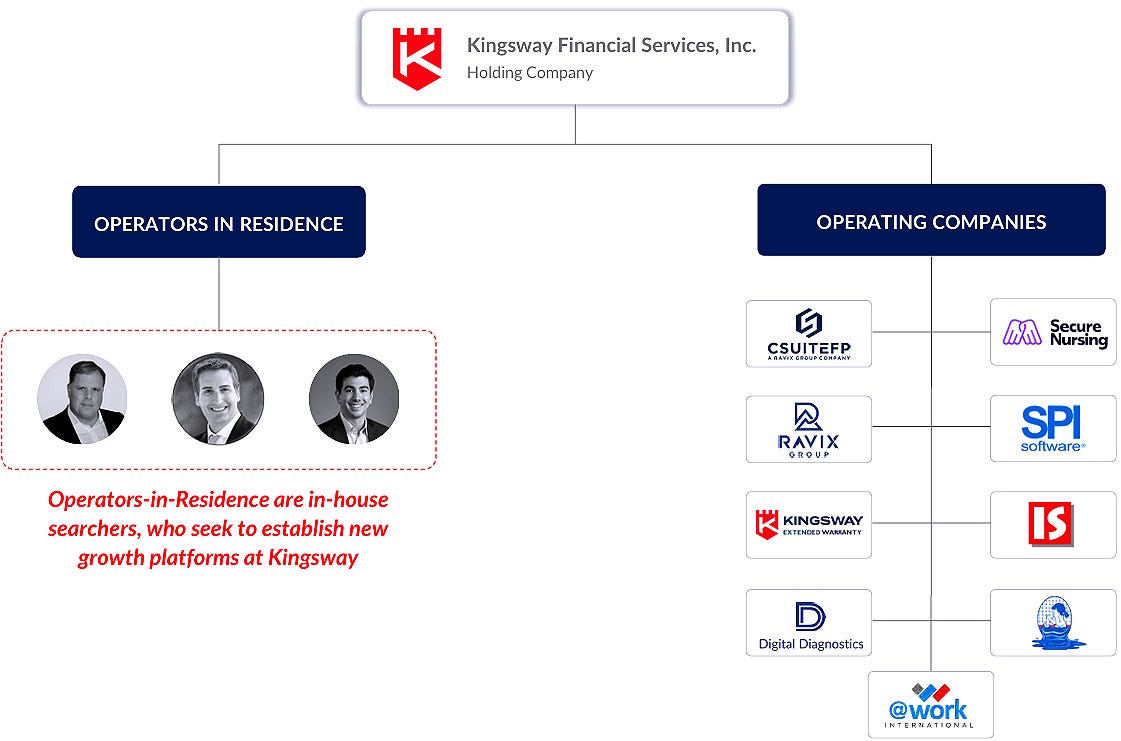
An OIR will prosper if they choose the right opportunity and successfully manage and grow that company. Their fate is completely in their own hands. This isn’t like working at a consulting firm or being another VP at a Fortune 500 company wondering where you fit in the next reorganization.
This attractiveness has allowed JT and Kingsway to find top-caliber candidates.
“J.T. has been able to attract outstanding individuals to enter our search program. These are generally people in their early 30’s, with strong credentials and who do not want to work in a highly structured and limiting corporate position.”
Charlie Frischer, board member
Here is a short audio clip of Charlie Frischer, who holds a larger equity stake than the CEO, explaining what motivated him to invest and to join the board of Kingsway3:
- Superior Resources and Support
Kingsway’s decentralized management model fosters agility and domain focus while the holding company provides capital and strategic oversight.
The OIR receives resources an independent searcher lacks:
Deal-Sourcing Infrastructure: Including 5,000 broker relationships
Superior Financing Terms: 7.5% fixed loans versus 11% SBA loans with personal guarantees
Post-Acquisition Operational Support: Through the “Kingsway Business System” (KBS), explained in the next section.
- The Kingsway Business System (KBS)
Inspired by the famed Danaher Business System (DBS), which itself was modelled on the iconic Toyota Business System that spawned both the ‘Lean’ operating principles and ‘Six Sigma’ process improvement methodologies, Kingsway has designed and implemented the Kingsway Business System.
Kingsway isn’t simply paying lip-service to this tried and tested operating model, it has a former Danaher CEO on its advisory board to ensure it is implemented properly - more on this shortly.
KBS employs the X-Matrix Hoshin Kanri framework to translate annual strategic objectives into cascading, measurable initiatives. Applying lean operating principles, standardized KPIs and structured governance, Kingsway drives margin uplift and scalability across its heterogeneous subsidiaries.
This structure institutionalizes best practices and underpins the margin expansion Kingsway typically targets within 12-24 months of acquiring a business.
KBS is rooted in the culture of ‘kaizen’ (continuous improvement), where the goal is to identify and suggest small, ongoing improvements.
The company allocates capital to modest, tuck-in deals that can be integrated in roughly six months, while also pursuing organic growth by reserving funds for “efficient trial-and-error” pilots inside existing subsidiaries.
These efforts are executed through low-cost, iterative tests to gauge market receptiveness without heavy capital commitments. Each has explicit cost caps and ROI hurdles embedded in the KBS scorecard.
The appliance-warranty test at PWSC, for instance, was halted when early metrics lagged, freeing resources for higher-return projects without impairing the core business’s cash generation.
Yet, it’s not just about increasing revenues; it’s also about improving efficiency. Within PWSC, despite modest top-line expansion, PWSC’s EBITDA improved significantly as Kingsway tightened its cost structure, removing duplicative roles and introducing process automation. Management credits the Kingsway Business System with this success as it focuses on “doing more with less”.
In short, the KBS is a huge competitive advantage for Kingsway as it introduces the kind of management focus and discipline that is absent in most other businesses.
- The KSX Advisory Board: World-Class Mentorship
The KSX Advisory Board provides portfolio company CEOs with tools and coaching on leadership, talent development, strategy, execution and capital allocation. This is a huge advantage that standalone search funds lack.
The KSX Advisory Board includes three exceptional individuals:
Tyler Gordy: An early searcher at Kingsway who became CEO of PWSC, the proof-of-concept search after JT arrived at the company. PWSC was bought for $5M and sold for more than $50M less than five years later, creating wealth for Tyler and his family and providing capital to pay off Kingsway’s debt. Tyler is the most successful Kingsway searcher to date and proof that the model works within the Kingsway structure. He now offers counsel to other searchers at Kingsway.
Tom Joyce: Former Danaher CEO who helped develop and implement the Danaher Business System (itself formulated on legendary Toyota kaizen principles, commonly known as ‘lean’ in the West). Kingsway has emulated these winning processes and called them the Kingsway Business System. Notably, Tom is also on the board of Roper Technologies. He is a true heavyweight entrepreneur.
Will Thorndike: Author of ‘The Outsiders: Eight Unconventional CEOs and Their Radically Rational Blueprint for Success’ (a book with a cult following in the investment community), who is himself a prolific search fund investor. Search companies that excel tend to be those with the best advisory boards, making this a huge competitive advantage for Kingsway.
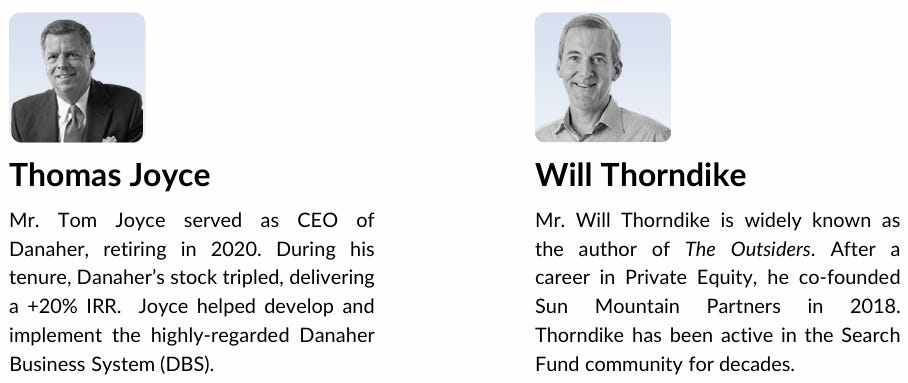
Let’s hear directly from these key characters to learn what excites them about search funds and why they have chosen to work with Kingsway. CEO JT Fitzgerald interviews both in this short video:
- Operating Philosophy
CEOs are encouraged to cut non-strategic costs to the bone and redeploy these dollars to strategic investments that will grow earnings and cash flow and enhance their competitive position. Any excess cashflow is returned to the holding company to be reallocated elsewhere, invariably to fuel future acquisitions and to keep the fly-wheel spinning.
CEOs retain day-to-day control but must submit standardized monthly financial reports, including loss triangles and KPI dashboards, to corporate HQ. Variances beyond preset thresholds prompt escalation to senior leadership for corrective action. This model blends entrepreneurial flexibility with rigorous governance, contrasting with the looser controls acquired businesses experienced under prior owners.
Early adopters of the Kingsway Business System reported “over-meeting” fatigue as weekly and monthly reviews consumed significant executive bandwidth. In response, Kingsway has segmented tactical stand-ups from strategic checkpoints and introduced digital dashboards to shorten sessions. Managers now acknowledge that, although demanding, the structure accelerates issue resolution and keeps teams aligned on the handful of priorities that truly move the needle.
- Financing and Incentive Structure
Kingsway finances acquisitions with reasonably priced financing that carries high amortization schedules, typically completely amortizing over 4-5 years. If an acquisition performs well at the end of the 5-year period, it will typically refinance the business with a new, larger loan to both provide additional capital to Kingsway and deliver a cash payment to the searcher-CEO, reflecting their contribution to the increased business value. The goal is to make this process repeatable.
- Track Record
As previously discussed, PWSC was Kingsway’s proof of concept, generating a 10x return on exit, after a mere 4.5 years of ownership.
It has since enjoyed similar success with other search fund investments.
Ravix has nearly doubled EBITDA in 3.5 years, while Digital Diagnostics (DDI) is on pace to more than double revenues within 4 years.
This isn’t luck, it is a fine tuned system working as intended.
- Why Exit at All?
Search fund acquisitions are executed at low EBITDA multiples and in the early years the focus is on paying down acquisition debt. It’s very conservative balance sheet management and the company rarely re-levers the balance sheet to augment growth.
Returns come largely from organic earnings growth by expanding the business and improving unit economics, amplified by an element of multiple expansion.
Having installed a talented CEO, improved operational efficiency and scaled the business, the search fund will have created significant value ready to be harvested.
Selling the company crystalizes this gain and frees up capital that can be redeployed into new search fund investments available at lower multiples, whereupon the entire process may be repeated.
In most cases, the searcher who steps in as CEO stays with the business even after it’s sold. They’re often the ideal person to lead it forward: still young, energetic and deeply familiar with the company’s operations and culture. The sale marks a significant milestone for them too, providing a well-earned financial reward for guiding the company from the search fund stage through to a successful exit. And the business itself often benefits as well; under new ownership, it typically gains access to additional capital and the ability to take on more leverage, setting the stage for its next phase of growth.
It’s very much a win-win scenario.
The best time to exit is when organic growth begins to slow and new capital (debt or equity) is required. It’s about capturing value at the point the search company has achieved ‘exit velocity.’ By this time, the growth algorithm is proven, the corporate engine is roaring and the company has a top-level CEO who will remain with the business with a multi-year track record and skin in the game through equity ownership. It’s a great proposition for the next owners and data shows that returns on these companies post-sale continue to be exceptionally strong.
That having been said, since empirical evidence suggests that the performance of search fund companies post exit remains very strong, Kingsway is exploring longer holding periods and perhaps eventually evolving into a buy and hold-forever model.
- The Kingsway Portfolio
Kingsway is, in essence, a specialized holding company operating a collection of niche, asset-light services businesses. Nine attributes make it very exciting from an investment perspective.
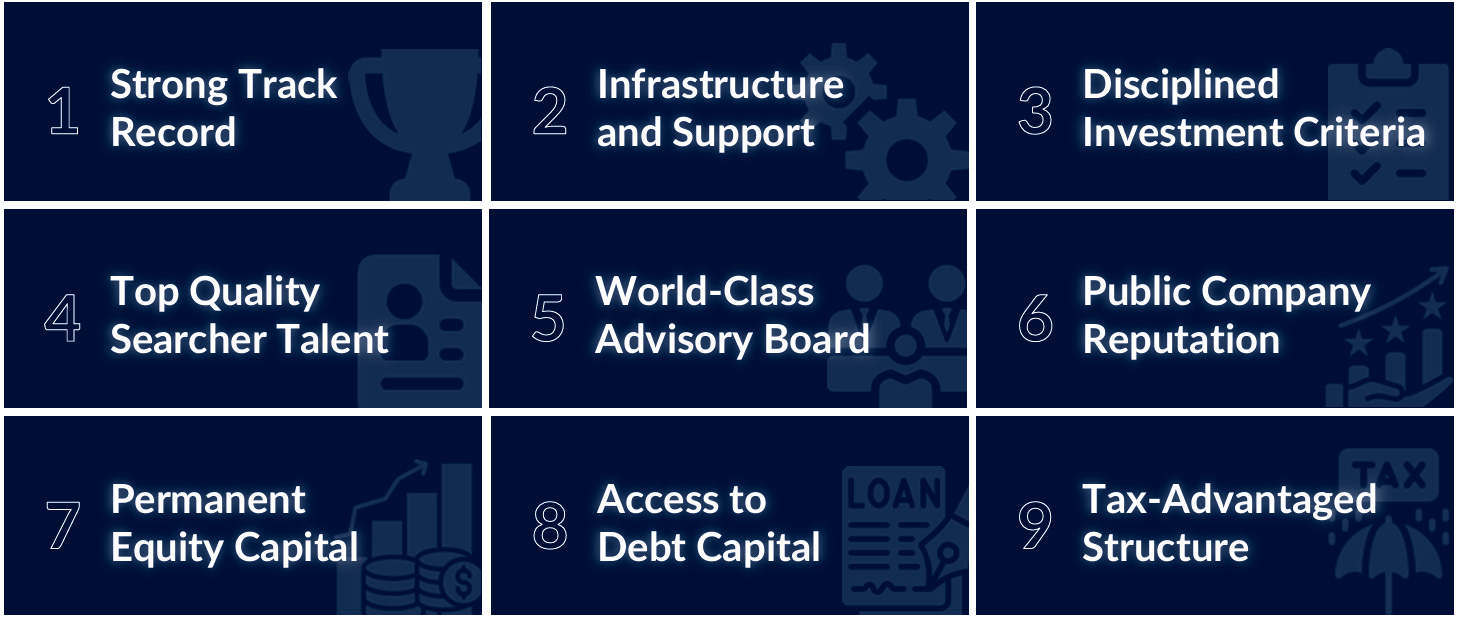
The diverse portfolio leans toward B2B services, vertical market software and skilled trades. These sectors aren’t chosen by accident, they share three key characteristics that align perfectly with Kingsway’s investment philosophy:
High Growth Potential: Organic growth at least twice the rate of the broader economy (2x GDP growth)
Recurring Revenue: High levels of recurring revenue supporting durable, predictable earnings
Capital Efficiency: Strong returns on incremental invested capital while requiring minimal working capital and limited capital expenditure
- Strategic Discipline
A core part of Kingsway’s strategic discipline lies in how it applies the Ansoff Matrix to guide growth decisions. The company gravitates toward the top-left quadrant: the low-risk path of expanding wallet share by increasing sales of existing products within existing markets. This approach represents the most efficient and reliable avenue for compounding growth, allowing Kingsway to deepen customer relationships and extract more value from proven business models.
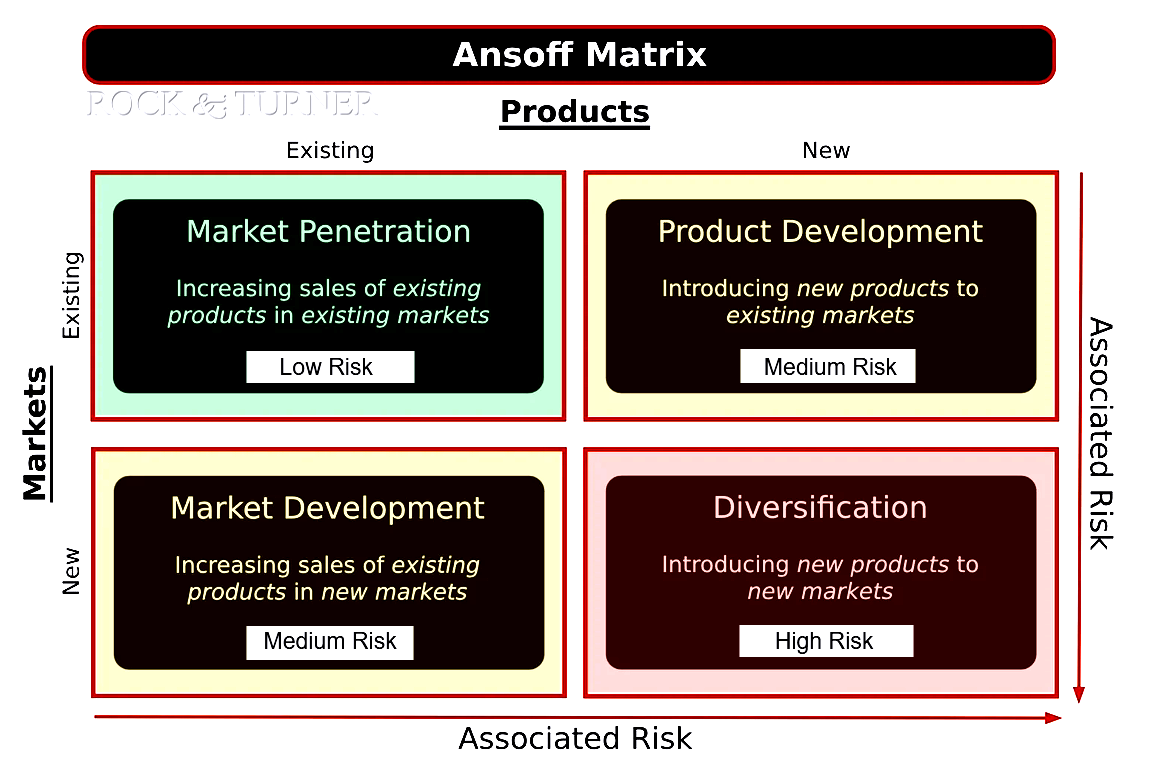
At the other end of the spectrum, Kingsway deliberately avoids the bottom-right quadrant: the high-risk pursuit of developing new products for entirely new markets. Such ventures often demand significant resources and carry the highest probability of failure.
While the company may occasionally explore opportunities in the other two quadrants, its preference is clear: when fresh capital is available for growth, it will always favour low-risk, high-probability returns over speculative expansion.
This disciplined mindset doesn’t just shape how Kingsway invests, it also governs how it selects acquisition targets. Each potential acquisition is evaluated through the same lens, favouring businesses that can grow safely, steadily and profitably with the best risk versus reward profile. It doesn’t stray from its proven framework for value creation.
- Two Reportable Segments
The company conducts its business through two reportable segments:
Extended Warranty Business
Kingsway Search Xcelerator (KSX)
Extended Warranty
Consumers are increasingly offered the option to extend the standard OEM warranty that comes with new item purchases. Kingsway is heavily involved in this business through its Extended Warranty segment for two product types:
Vehicles: Operating through subsidiaries IWS, Geminus/Penn and PWI for new and used autos
HVAC and Equipment: Operating via Trinity for HVAC and other equipment warranty programs
Through these subsidiaries, Kingsway functions as a principal, underwriting and warehousing the risk associated with extended warranty contracts, much like an insurance company, although some risk may be shared through the reinsurance market.
This is a valuable segment which is being expanded via new sales strategies involving credit unions and dealer networks. It has experienced some short term turbulence, principally driven by recent inflationary pressures which were not foreseen by the actuaries pricing the warranties. However, the company is through that period and short-term insurance is very easy to re-price, meaning that these problems will not persist.
When analyzing the extended warranty segment there are some things to be aware of — in particular, accounting for a fast-growing warranty business creates timing distortions. When premiums are received upfront but revenue is recognized gradually over the warranty period, profit margins appear adversely affected initially.
To better understand why this is, premiums are recorded as deferred revenue, a balance sheet liability. While the full operating costs associated with capturing those premiums are recorded on the income statement, the revenue itself trickles through over an extended period. This gives the appearance of poor operating performance even though cash inflows are strong.
Revenue is recognized periodically (often on a straight-line basis) over the warranty contract life as coverage gradually expires. When deferred revenue is eventually released as actual revenue, often with minimal direct associated cost, this revenue reversal appears at near 100% gross margin, creating a subsequent boost in reported revenue and profit margins.
So, the timing differences between cash received and revenue recognition causes margins in audited accounts to be volatile. Kingsway’s warranty businesses are rapidly expanding and currently appear to be poorly performing, yet they are very good and the release of revenues in periods ahead will paint an entirely different picture.
Kingsway Search Xcelerator (KSX)
KSX is an eclectic mix of businesses providing recurring or repeat-service revenue in their niches, helping stabilize the overall revenue base:
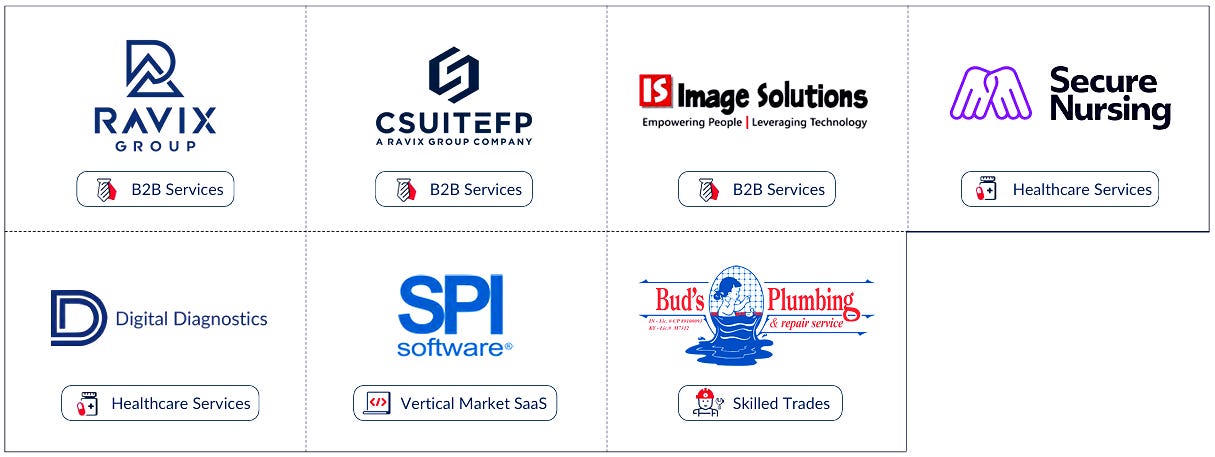
CSuite — Professional services firm providing experienced CFOs and other finance professionals through flexible offerings including project and interim staffing engagements and contingent search services for permanent placements throughout the United States
Ravix — Outsourced financial services and human resources consulting for short or long duration engagements for customers throughout the United States
SNS — Healthcare staffing services to acute healthcare facilities on a contract or per diem basis in the United States, primarily in California
SPI — Software products created exclusively to serve the management needs of all types of shared-ownership properties throughout the United States, Europe, Asia, Australia, Mexico, and the Caribbean
DDI — Outsourced 24/7 cardiac telemetry services for long-term acute care and inpatient rehabilitation hospitals. Outsourcing cardiac monitoring is intended to allow hospitals to eliminate personnel callouts and HR issues, remove distractions from onsite operations, and free up facility staff to assist directly with patient care. DDI currently has a presence in 42 states and Puerto Rico
Image Solutions — Comprehensive information technology managed services, including equipment sales, service, and helpdesk support to customers primarily in North Carolina, Kansas, Georgia, Kentucky, and Tennessee
Bud’s Plumbing — Comprehensive range of plumbing services, including emergency repairs, drain cleaning, water heater installations, and water treatment solutions to residential and commercial customers, primarily in Evansville, Indiana
Roundhouse Electric — In July 2025, this was its 9th acquisition. An industrial electric motor services business, which is growing, capital‑light, with high‑recurring‑revenue and strong customer relationships (more than 200 active customers) plus a strong culture, matching the KSX investment criteria. Roundhouse focuses on industrial‑scale electric motor maintenance, repair, testing, and sales. Its core customers are midstream natural gas pipeline operators and utilities in the Permian Basin, where motors are mission‑critical to keep gas moving. The business is Texas-based. KSX paid $22.4m against $4.2m adjusted EBITDA - a 5.3x multiple. Notably, this deal is the largest, so not only is the M&A cadence increasing but so too is the average deal size, both of which will accelerate the effects of future compounding.
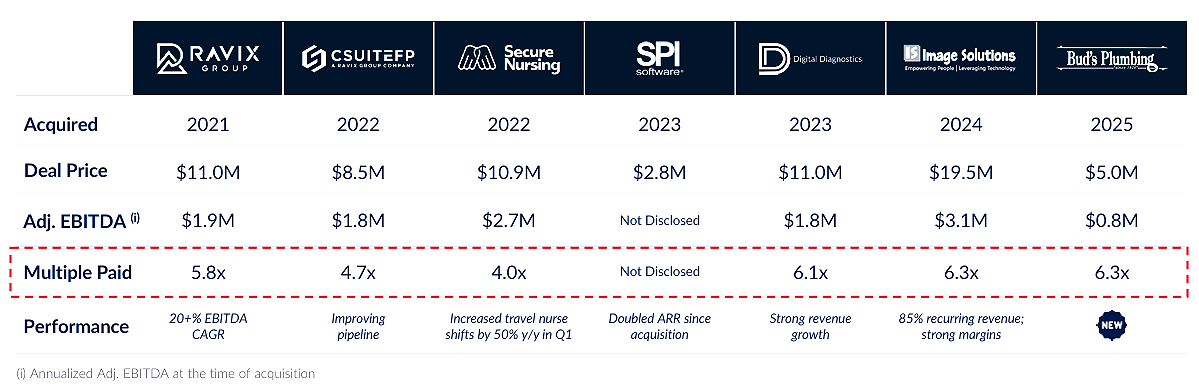
KSX is a great engine to identify and execute acquisitions of growing, profitable, asset-light businesses at reasonable valuations. It applies exacting criteria to the companies it buys, wanting to own companies with predictable and enduring high returns on capital with strong secular growth tailwinds.
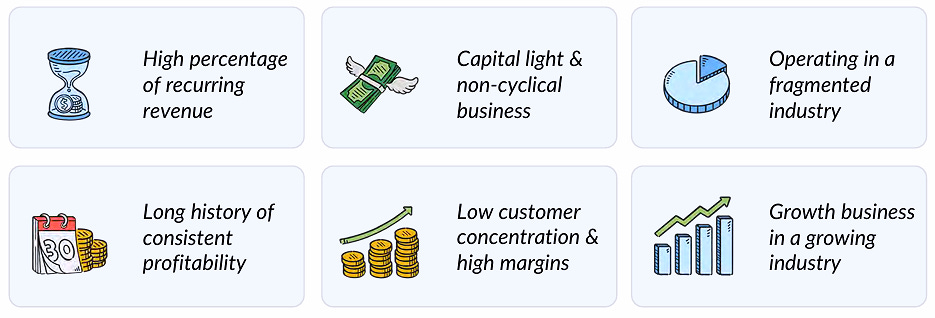
The company appears poised for a bright future as a high-return compounding machine.
- The J-Curve Effect
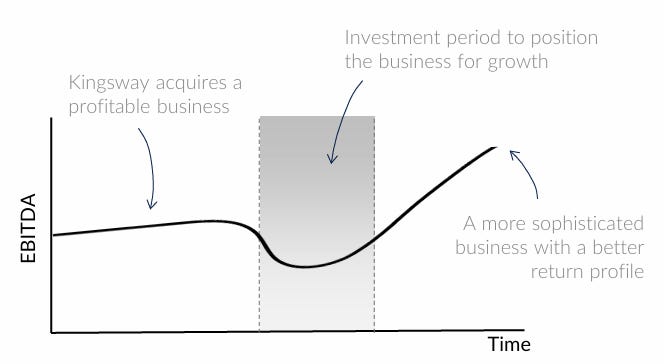
It’s worth noting that when Kingsway acquires a new search fund business, the economic benefits that motivated the acquisition are rarely immediately apparent in financial results. There’s often a “J-curve” effect in play. While revenue typically continues to climb, the company also begins investing heavily in strengthening the acquired business—laying groundwork for long-term performance improvements. Combined with acquisition costs, these investments for the future show up as higher operating expenses in the near term, temporarily weighing on profitability before benefits become visible. This manifests in a profit curve that resembles a letter ‘J’.
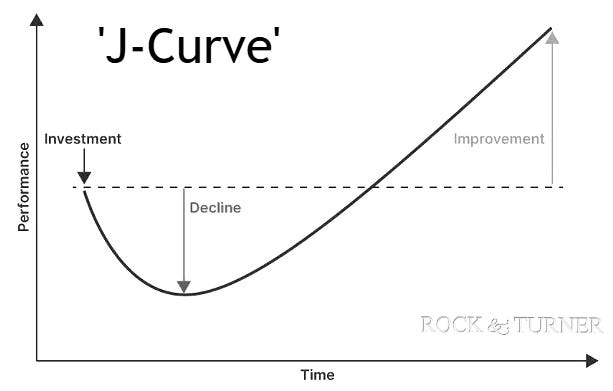
It’s short-term pain for long-term gain, setting the stage for sustained growth. Investors need to factor this J-Curve effect into analysis of both the business and its acquisitions.
- Case Studies: The Strategy in Action
(1) Building a ‘Skilled Trades’ Platform
This case study begins, earlier in 2025, when Rob Casper, ex-military and a Harvard Business School graduate with extensive expertise in the HVAC and plumbing industry, approached Kingsway with a pitch for a new search fund. He came with a very specific thesis around plumbing.
The idea is to start with plumbing because this is one of the most challenging services to deliver well. Unlike almost all other service industries, when a plumber is called it’s often due to an emergency situation that can’t wait.
Service level agreements require no more than four hours to respond when a plumbing issue occurs. In contrast, with HVAC you might have 24 hours, and for roofing issues you might have a month. So plumbing sets the gold standard for customer service response times.
Casper explained that if you have a good reputation and enviable market share in a geography as a plumber, it’s very easy to then add ancillary trades to that brand. The point he was making is that it would be much harder to go from HVAC into plumbing, than from plumbing into HVAC, for instance.
What starts as plumbing today could be an entire suite of services in the future.
So Kingsway bought into the thesis and is now actively developing a “buy-and-build” strategy, using the ‘Kingsway Skilled Trades’ platform, to acquire and roll up small, profitable companies in specific, fragmented industries.
This is a similar playbook to that successfully deployed by Brad Jacobs. His roll-up model has served him so well in multiple industries by exploiting economies of scale.
The journey began following a 5-month search process, culminating in the acquisition of Bud’s Plumbing, which enjoys market share more than double its closest competitor in its home market.
Casper is now the highly-qualified OIR in charge of executing the plan, conducting targeted acquisitions and exploiting synergistic opportunities as part of the growth strategy.
The foundation is established; now the building begins with follow-on acquisitions to expand into other markets geographically. The idea is to eventually become a one-stop service company.
Follow on acquisitions have included Southside Plumbing and AAA Flexible Pipe Cleaning into this platform.
Casper believes most service firms are poorly managed and inefficient. By rolling them up, not only will synergistic benefits accrue, but efficiency measures will immediately improve unit economics.
From this case study it can be seen that Kingsway operates a hybrid model that sits somewhere between the Programmatic Acquirer (building a portfolio of standalone autonomous businesses) and a Serial Acquirer (roll-ups seeking synergistic benefits).
In this way, its structure allows existing business leaders to actively pursue tuck-in acquisitions: small, strategic deals that expand their own platforms and deepen Kingsway’s footprint within specific verticals. Each acquired business can effectively become a launchpad for further consolidation, creating a self-reinforcing cycle of growth.
As synergies take hold, organic growth strengthens alongside acquisitive expansion, each feeding the other. Kingsway’s hybrid approach thus captures the best of both worlds: the discipline of a programmatic buyer and the creative momentum of a serial acquirer.
Kingsway’s subsidiaries essentially become focused consolidators in their respective industries. By grouping similar businesses under one umbrella, the company achieves efficiencies and economies of scale that independent operators could never reach on their own. It’s a deliberate balance between programmatic precision and serial acquisition agility — combining the rigor of a top-down strategy with the dynamism of entrepreneur-led growth.
(2) A SaaS Success Story
SPI is another great case study. It’s a SaaS software platform for timeshare and vacation clubs, providing a one-stop solution for dealing with leads, guest management, resort communications, and web portal maintenance. It was acquired in 2023 for 1.3x Annual Recurring Revenue. Following improvements to its sales force, it has won new enterprise customers and improved its net revenue retention metrics. By 2024, it had achieved Rule of 40 status4.
- Understanding Small Business Dynamics
It’s important to understand that most businesses, especially small companies, are not run by business people. Someone may leave school and undertake vocational training as a plumber, serve an apprenticeship, and then decide to go it alone. They employ a few other plumbers to create a great team of skilled tradespeople, but none of them has expertise in running a business. They don’t understand the nuances of corporate finance and capital allocation. Most likely, all free cash flow will be extracted to fund management lifestyles, rather than being reinvested in growing the business.
As such, it should come as no surprise that Kingsway is able to acquire these companies, professionalize them and significantly improve them economically.
It always focuses on the same growth levers and frameworks for improving its acquired businesses.
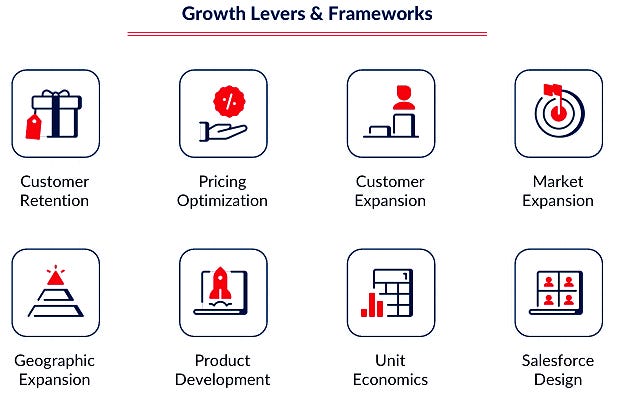
Kingsway has established several other platforms, approximately seven, including ‘IT Managed Services’ and ‘Accounting Services’.
-Accelerating Growth: Recent Developments
Strengthening the Balance Sheet
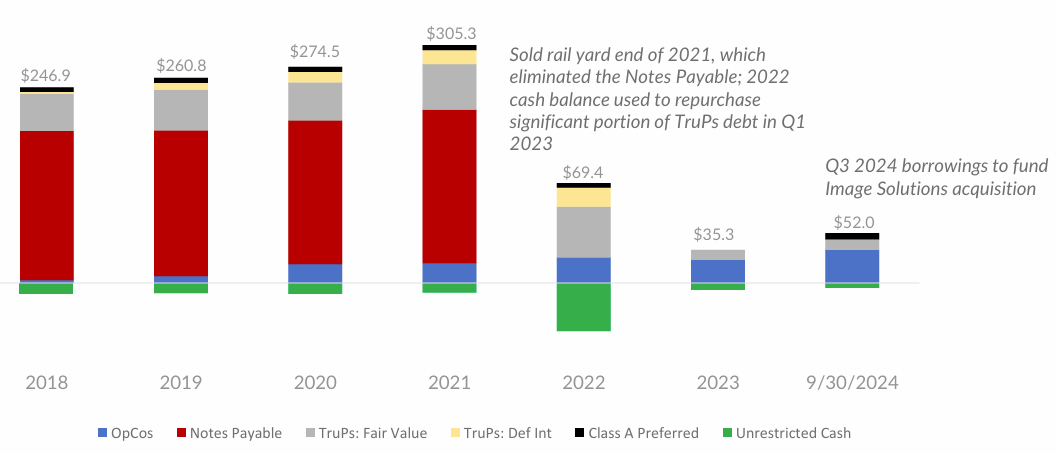
Kingsway made significant strides to deleverage in 2023. Understanding that, having emerged from the ZIRP era, we are entering an environment of higher interest rates and potential choppy waters, it maintains a robust conservative balance sheet, providing the financial flexibility to play the capital cycle and pounce on acquisition opportunities when others are feeling financial stress.
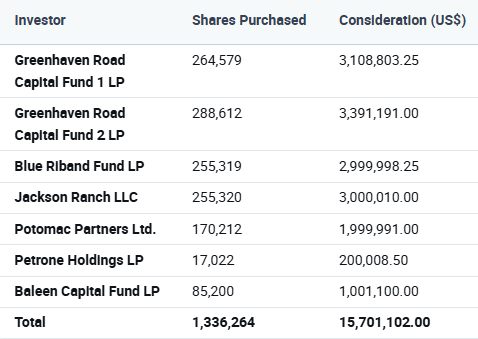
Rather than relying on debt, Kingsway strengthened its balance sheet with a $15.7 million ‘private investment in public equity’ (PIPE) on June 25, 2025, issuing approximately 1.3 million shares. The fresh capital, sourced from a concentrated group of long-term institutional investors, positions the company to accelerate its search-fund-driven roll-up strategy.
Kingsway aims to continue growing both through acquisition (investment in new search funds) and organically. It averaged 1.5 investments annually in the early years of the decade, then increased its run rate to 2 or 3 per, but is now targeting 4 or 5 annually.
Since the PIPE, Kingsway has completed three additional KSX deals, including the $22.4 million purchase of Roundhouse Electric & Equipment (July 1, 2025) and the $3.5 million acquisition of Advanced Plumbing and Drain (August 1, 2025), bringing 2025 year-to-date closings to five—already at the top end of the new range.
“Each of our recent acquisitions aligns with our vision to build an exceptional portfolio of growing, profitable, and recurring revenue services businesses led by our talented Operator CEO’s. Kingsway is committed to driving significant long-term value for the Company’s shareholders, and I am confident these transactions demonstrate our public Search Fund strategy is delivering as promised.”
JT Fitzgerald, CEO
A deeper operator bench and a robust funnel of recurring-revenue service businesses suggest Kingsway can maintain the higher deal tempo while adhering to its disciplined investment criteria. It is reasonable to anticipate accelerated growth in the years ahead.
In August, the company reported its Q2 2025 financial results in which management cites improving KSX revenue (+42% YoY) and adjusted EBITDA (+31% YoY) as evidence that incremental acquisitions are translating into earnings growth.
- The NOL Advantage: A Powerful Tax Shield
Between 2009 and 2017, under its legacy business model, Kingsway accumulated over $620 million of residual Net Operating Losses (NOLs).
These NOLs will shield cash flows generated from its growing portfolio of operating companies from federal taxes for years to come, allowing for a powerful, tax-free enhanced engine to compound returns.
The NOLs have long expiry dates, as shown on the graphic below.
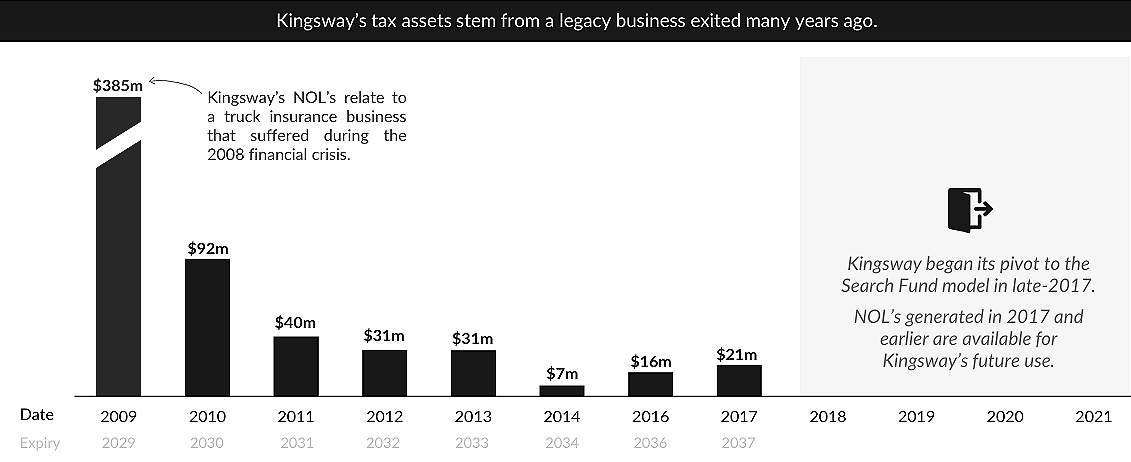
The lion’s share of these NOLs will expire in 2029. At the current earnings run rate and growth trajectory, even the company’s impressive momentum may not be enough to fully absorb them before the window closes.
This looming deadline could shape strategic decisions in subtle but meaningful ways. NOLs aren’t limited to offsetting ordinary income, they can also offset capital gains. This creates a powerful incentive for management to consider accelerating the sale of certain subsidiaries, particularly those that fall outside Kingsway’s long-term vision as a pure-play search fund holding company.
Some legacy businesses, such as the extended warranty operations, are strong cash generators but not part of the KSX incubator program, which is the company’s focus for the future.
In today’s market, these extended warranty businesses can command attractive exit multiples, offering Kingsway a rare dual benefit: the ability to shelter capital gains under existing NOLs and reinvest the proceeds into KSX search fund opportunities available at far lower multiples. The resulting multiple arbitrage could be significant, compounding value creation.
Given the caliber of Kingsway’s management team and their disciplined capital allocation track record, such a strategic pivot seems not only plausible but highly likely in the near future. If executed, it would have a profoundly positive effect on the balance sheet, unlocking trapped value, enhancing liquidity and accelerating growth of the KSX segment.
That said, Charlie Frischer, board member at Kingsway with a 6.5% holding (larger than the CEO’s stake), made clear: “It is important to recognize that these NOLs exist to help reduce our tax expense and do not drive our investment decisions... The failure of other companies with NOL assets is that they often let these tax assets override all decision making at the corporation. At Kingsway, the NOLs serve shareholders and we don’t do deals to keep the NOLs happy.”
I guess we’ll have to wait and see what unfolds.
- Financial Performance
Extended Warranty Segment: Operating income declined to $5.9 million in 2024 from $7.0 million in 2023 as inflation-driven parts and labour costs increased claims expense, compressing margins despite a 4.6% drop in the number of claims. As mentioned earlier, this was due actuaries not foreseeing the spike in inflation and so mispricing the warranties. The benefit of the warranty business is that it involves relatively short-term insurance contracts which can be rapidly re-priced to correct such issues. This has now happened.
In 2025 earnings reports, management has noted that it expects operating leverage to improve as the segment recovers. The business has returned to growth in cash sales, and key forward-looking indicators of profitability are now solidly positive. After two challenging years marked by industry headwinds and cyclical pressures, the Extended Warranty segment appears to be entering a more favourable cyclical phase, with early signs pointing to both healthy top-line growth, stronger margins (refer to the accounting note above) and renewed operating leverage.
KSX Segment: The business accelerator segment improved in 2024, with revenue rising to $40.5 million (vs. $35.0M in 2023) and operating income of $5.7 million (up from $5.3M). 2025 numbers are encouraging and suggest momentum is building, with KSX leading the growth thanks to acquisitions like Image Solutions and Bud’s Plumbing.
- Important Accounting Consideration
Kingsway currently doesn’t screen very well and it has virtually no analyst coverage. This isn’t necessarily a bad thing. It creates a very compelling window of opportunity to invest.
To properly understand Kingsway, don’t look at the quarterly or annual financial reports. They are entirely misleading and this largely explains why the company can’t be discovered using conventional stock market screeners.
Allow me to explain.
For years, the extended-warranty segment dominated the company’s revenue, and because of that, the financial statements have been presented in a format typically used for warranty businesses. It’s an odd structure to look at if you’re used to conventional GAAP presentations. But here’s the thing: GAAP simply wasn’t designed for this type of business model.
As explained above when we looked at the Extended Warranty Segment, when a customer buys an extended warranty, the company receives the cash upfront, but the revenue can’t be recognised immediately. Instead, it’s deferred and released evenly over the life of the contract. Meanwhile, all the costs associated with generating that revenue are recognised as they occur. The result is a persistent timing mismatch. Margins look artificially weak, earnings appear suppressed and the income statement ends up presenting a version of reality that doesn’t reflect the economic strength of the business. And because operating cash flow begins with net income, that distortion flows through the cash-flow statement as well.
This year marks an important turning point. The KSX segment has now overtaken the extended-warranty segment and accounts for roughly 60% of revenue. With KSX becoming the primary engine of the business, the company can finally move toward presenting its accounts in a more conventional format, something the audit committee is actively working on. Whether this shift can be reflected in the upcoming 10-K for 2025 is still being evaluated. The company believes the year-end statements may need to follow the structure used in the first three 10-Qs of the year, which means the new format is more likely to appear beginning in Q1 2026. Either way, the numbers will soon look very different.
That shift will start revealing something investors currently can’t see: the accelerating pace of KSX acquisitions. These deals are being done at roughly five times EBITDA and bring in recurring, sustainable, growing revenue. None of that value is obvious in the current statements, but it will be. The company is already trying to guide investors with adjusted EBITDA numbers, which more closely mirrors what the new reporting format will capture. But the adjusted EBITDA numbers can’t be reconciled against the audited financial accounts for the reasons given.
When this formatting issue is resolve, the market will have a clearer view of the true earning power of the business and the share price should re-rate. So investors today have the prospect of exceptional compounded growth on top of significant multiple expansion (more on this shortly).
Some of the other strange accounting items, mostly legacy, also muddy the picture. One example is the amortization of intangible assets. You may wonder what intangible assets the company even has. Historically, when acquisitions were made, purchase price allocations were structured to reduce tax liabilities by booking customer relationships as intangible assets and amortizing them over time. But with a decade’s worth of NOLs, the company doesn’t need that kind of mitigation, and in reality, customer relationships tend to stick around and don’t need to be amortized at all. Yet the expense still flows through the income statement, reducing reported earnings and understating margins, despite being a non-economic charge.
There are other things in the accounts that distort the numbers, but without laboring the point, you get the general idea.
For investors who understand these quirks, none of this is a problem. In fact, it’s part of the opportunity. The company screens poorly because GAAP doesn’t capture the underlying value. Most investors aren’t willing to dig deeper, that’s their problem and your advantage. And as the new reporting format comes into play, much of this noise should fade. Management is making a clear effort to raise the company’s profile among investors and analysts. It’s only a matter of time before others start to see what’s really happening here.
- Valuation Considerations
The company does not currently screen well due to the Extended Warranty accounting issues and the KSX ‘J-Curve’ as the business finds itself in a phase of rapid expansion. The earnings power of the business is not reflected in the company’s numbers yet and so traditional earnings multiples are not meaningful as a measure of valuation. Similarly, the equity multiples are unhelpful as the net asset value of the business has been depressed by historic accumulated deficits, while the corresponding deferred tax assets (NOLs) are not recognized on the books.
The stock’s sales multiple is approximately 2.9x on a trailing basis, reflecting the market’s expectation of improved margins and growth, but once again is inflated by the delay in recognizing revenue on the Extended Warranty business as explained earlier.
The release of deferred Extended Warranty revenues at ~100% gross margin combined with the successful execution of the KSX growth strategy, together with the realization of healthy exit valuations on divested businesses, which is likely to include the divestiture of at least some of the extended warranty businesses, all shielded from tax by the NOLs will certainly enhance net earnings and free cash flows in the years ahead.
- The Drag On Share Price Performance
As mentioned earlier, activist investor Joe Stilwell’s renowned activist investment firm, Stilwell Value LLC, has been invested in Kingsway for more than 15 years and until recently he still owned ~30%.
The issue was that his fund specializes in value-driven investments focused on banks and, since Kingsway was no longer a merchant bank, his investors didn’t understand why it remained in their banking portfolio.
Then came the Silicon Valley Bank crisis, which created massive disruption in the banking sector. Suddenly many regional banks either began to look cheap or required an activist to turn them around. Stilwell’s LPs demanded that he reallocate capital from Kingsway to these very interesting banking opportunities.
The problem is that selling a 30% stake in a company with low liquidity is not easy. He capitalized on every opportunity to gradually reduce his holding, but this created a massive stock overhang which weighed down on the share price for an extended period.
Then, in early 2025, Adam Patinkin, Managing Partner of David Capital Partners, and Josh Horowitz, who runs the public equities portfolio for a family office based in Connecticut, spotted an opportunity. They saw the true potential of Kingsway.
Together, they helped remove that stock overhang through a $40 million transaction which provided Stilwell with the partial exit his investors sought.
Stillwell retains a 9% stake in respect of which his intentions are unclear. No doubt he sees the potential in the new Kingsway model and wishes to have some residual exposure.
Patinkin and Horowitz joined the board and embarked on a “positive activism” campaign. This involves working with the CEO to aggressively retell the company’s story, raise its profile in the market and position it as the high-growth, public search fund model it has become.
Of note is that Josh Horowitz serves as the Chairman of two other public companies. He joined the board of Limbach Holdings when the stock was at $5 and it subsequently rose to $100. He also joined the board of BK Technologies when the stock was at $10 and it later rose to $70. This raises the question of what he is able to achieve for Kingsway.
Since their involvement the stock more than doubled from a share price just above $7.00 in March 2025 to $16.80 by July. Since then, the shares have softened and today trade closer to $13.00.
- Share Buyback Optionality
In terms of other catalysts for share price appreciation, the company has demonstrated that it is ready, willing and able to lean into opportunistic buy backs and, with William Thorndike on the advisory board, this strategy is hardly surprising. Accretive buybacks form a large part of his writings, particularly those executed by the legendary CEO, Henry Singleton.
“We believe it is good practice to have a plan in place to execute accretive repurchases of stock if our public share price becomes temporarily dislocated from our view of intrinsic value per share.”
JT Fitzgerald, CEO
- Risks
If extended warranty sales falter (due to an economic slowdown or competitive pressure) or if Kingsway overpays for acquisitions that then underperform, the anticipated earnings ramp may not materialize. This is always the primary risk — essentially execution risk.
The warranty segment is sensitive to short-term cost variability in relation to both spare parts and labour costs that may flow from inflation, tariffs or perhaps changes in shipping costs. This has been a headwind for the past couple of years which is now abating, yet it demonstrates that even this type of business suffers from cyclicality.
Ironically, because the warranty business is back in growth mode, accounting methods mean that reported results will appear weak for several more quarters, potentially weighing on share price performance in the short-term.
In respect of KSX, as an acquisitive holding company, Kingsway must execute well in respect of each search fund that it operates. The risks here are two-fold: first, the acquisition needs to be good; and second, the chosen OIR serving as the new CEO needs to prove competent. If either fails to meet expectations, the M&A may result in the destruction of shareholder capital. So far, Kingsway has proven itself adept at choosing both operator and business wisely, which bodes well for the future.
While each KSX subsidiary is unique, offering a degree of risk mitigation through diversification, legitimate questions arise about the capacity of the supervisory board to oversee an ever expanding universe of businesses. Growing the supervisory board by adding people of a similar caliber to those already serving will not be easy.
Then there are financial leverage and cash flow risks. KSX has driven impressive revenue growth and rapid expansion, but this growth is accompanied by leverage risks and EBITDA volatility.
Sowing the seeds of growth is an immediate cost, while the value of the ultimate harvested returns will only appear later. This causes a cash flow squeeze evidenced by rising net debt (~$68M) against low levels of free cash flow. While debt to adjusted EBITDA is approximately 3x, which is a moderate leverage ratio, debt cannot be serviced with adjusted EBITDA — it can only be serviced with cash. So, the company must balance its acquisition momentum with disciplined debt management to avoid stifling innovation or jeopardizing financial stability.
When recent acquisitions emerge from the dip in the ‘J-curve’ and cash flows accelerate, Kingsway will become self-financing without recourse to debt or issuance of new equity, but until then it needs to remain prudent.
It should be noted that long-term debt is down 80% from where it was in 2019, so management has proven itself to be fiscally prudent, which is good to see. Any near term divestments, perhaps an extended warranty business, will aid in bolstering the balance sheet still further.
It’s also worth highlighting an important structural advantage in how search funds use debt. Borrowing is taken on at the individual search fund level and is strictly non-recourse, which means that any liquidity problem in one business is contained to that business alone. It doesn’t spill over into other subsidiaries, nor does it affect the holding company5. Kingsway’s consolidated accounts don’t make this separation immediately obvious, but it’s an important protective feature. For investors, this ring-fencing of risk adds another layer of comfort and reinforces the resilience of the overall model.
It’s also worth noting that while debt would come slightly cheaper if it were raised at the holding company level, paying an extra 50 basis points is seen as a sensible trade-off. It keeps the risk appropriately contained and encourages stronger financial discipline within each subsidiary — a small cost for a meaningful improvement in stability.
Continuing the debt theme, interest rate and economic cycle dynamics have multiple effects on Kingsway.
Higher rates not only directly raise Kingsway’s borrowing costs but also dampen demand in auto sales because auto loan rates climb impacting affordability. This in turn can reduce demand for extended warranties sold at purchase.
While a benign environment (steady economic growth and easing inflation) would provide a tailwind for the company, a stagflationary or recessionary scenario would pose a compounded challenge.
A scenario where interest rates rise further or credit tightens could force Kingsway to slow growth or even restructure finances. While small equity raises have been well-utilized in the past, larger equity issuance in a debt for equity swap would impair shareholder returns by way of permanent dilution.
- Is Kingsway Corporation A Good Investment?
Before attempting to answer this question, let’s hear from JT Fitzgerald, Kingsway’s CEO and the architect behind its search model:
For a full hour long interview with JT Fitzgerald, CEO of Kingsway, please see:
The broader market backdrop only strengthens the Kingsway story. JT describes a “silver tsunami” forming on the horizon, with the baby-boomer generation set to transfer nearly $4.8 trillion of net worth over the next two decades. It’s the largest intergenerational wealth shift in U.S. history, and a significant portion of that wealth sits inside operating businesses. More than two million of those companies will need new leadership over the next ten years. For search funds and, by extension, for Kingsway, this represents an enormous and sustained growth runway.
Competition at the smaller end of the market is also far less intense than many assume. Most search fund investing still happens informally, with individual cheques in the $100,000 to $300,000 range being written by friends and family of the searcher, with opportunities sourced through entrepreneurship programs at elite business schools. Yet this is not Kingsway’s hunting ground. Instead, the company targets high-quality services businesses with EBITDA in the $1 million to $3 million range, typically acquired at four to six times EBITDA. Deals of this size are too small to interest traditional private equity and too large for individual investors, creating a quiet corner of the market where Kingsway faces limited competition.

From an investor’s perspective, Kingsway stands out as the only publicly traded U.S. company using the search fund model to acquire and grow businesses. It’s a compelling blend — leveraging the liquidity and flexibility of the public markets to execute a proven, high-return strategy within an inefficient segment of the private market. This gives Kingsway a significant structural advantage, both in sourcing acquisitions and in raising capital.
By contrast, several “fund of funds” now offer investors exposure to search funds, but these come with clear drawbacks. They add an extra layer of fees and typically require investors to lock up their capital for more than a decade. Kingsway’s approach avoids both of those constraints, making it a far more appealing alternative.
Valuation is where the story becomes particularly interesting. Kingsway has now shed almost all of its legacy merchant banking assets and is transitioning into a pure-play platform for operating and scaling search-fund-acquired businesses. Looking in the rear-view mirror won’t help. The right way to evaluate Kingsway is forward, through the earnings power of its growing portfolio.
Management provides trailing twelve-month adjusted run-rate EBITDA to give a clearer view of normalized earnings after removing the noise of the typical J-curve and acquisition-related costs. In 2024, adjusted EBITDA came in at $10.6 million, up 17 percent year-on-year. By Q2 2025, that figure had climbed to roughly $22 million including recent acquisitions — suggesting a potential doubling within a single year.
The pace of investment is clearly picking up. Newly acquired businesses are still in the early phases of operational improvement, so there’s plenty of room for both organic growth and further acquisitions. The growth trajectory feels well-established at this point. It isn’t far-fetched to think adjusted EBITDA could reach $30–40 million by 2026 or 2027, and potentially $75–100 million by the end of the decade. In that kind of scenario, Kingsway’s sizable NOLs become tremendously valuable, shielding not just operating earnings but also capital gains on any divestments — a dynamic that would materially accelerate net income growth.
At a market capitalization of around $365 million, the business already screens as attractively valued on forward earnings. It trades at about 12.9x trailing adjusted EBITDA and a mid to high single-digit multiple on a forward basis. It’s worth asking: where else can you find a programmatic acquirer growing at this pace, with this level of embedded tax efficiency, available at anything remotely close to this valuation? Most comparable platforms are expanding more slowly and trade at significantly richer multiples.
So why is it still priced this way? The simple answer is reputation and awareness. Kingsway’s history as a troubled insurer and later as a struggling merchant bank left it largely ignored by the market. Many investors simply haven’t noticed the transformation, and even fewer understand the search fund model well enough to appreciate what the company is building.
But that window won’t stay open forever. Profitability is improving, the model is scaling and the valuation still doesn’t reflect the quality of the business. As revenue expands through both acquisitions and organic improvements, as margins rise and as the market begins to re-rate the company, the compounding effect can be powerful. Share repurchases would amplify that effect further.
This has all the hallmarks of a rare multi-decade compounding opportunity. Kingsway is still a micro-cap, which means investors today are effectively getting in on the ground floor. There is no structural reason it couldn’t grow into a multibillion-dollar enterprise over time if it continues executing on its strategy.
Some observers may also notice shades of Berkshire Hathaway and Markel in the model. Kingsway’s Extended Warranty segment enjoys negative working capital qualities and so generates float — and history has shown how companies with disciplined underwriting and strong capital allocation can use float to significantly enhance long-term shareholder returns.
These growth assumptions are hardly aggressive. In fact, every quarterly earnings release over the next several years has the potential to serve as a catalyst as the company demonstrates rising revenue, expanding margins and stronger free cash flow. With large NOLs in place, any improvement in pre-tax income will flow almost directly into after-tax earnings, likely surprising investors who have not yet connected the dots.
As Kingsway grows its market cap, it will naturally draw more attention. Inclusion in small-cap indices or the start of sell-side analyst coverage would further raise its profile.
What is clear is that Kingsway has reinvented itself. It has evolved from a failed insurer and underperforming merchant bank into a disciplined, scalable search-fund accelerator with a repeatable model and a long runway. For the investors who recognize what’s happening — who understand the model and see the inflection point — this may be one of the most compelling opportunities in the public markets today. As JT Fitzgerald put it: “This is the real deal.”

Further reading:
Investor Day Presentation, 18 May 2026:

Nearly half of recent searchers took a formal “entrepreneurship through acquisition” class in business school. They benefit from established networks of investors, mentors, service providers, and fellow searchers who share deal flow, advice and support.
A recent 2025 reshuffle of the board led to Frischer standing down, but he is still increasing his investment in the company taking his stake to ~6.5% in April this year worth around $25 million
The Rule of 40 (annual revenue growth rate plus profit margin equals or exceeds 40%) is a prized benchmark in the software and SaaS world because it neatly captures the balance between growth and profitability. Too many software companies prioritize hypergrowth at the expense of margins, or vice versa. The Rule of 40 acts as a reality check, requiring both top-line growth and healthy margins to meet the 40% threshold. If a firm grows rapidly but can’t generate margins, or is highly profitable but stagnant, it falls short of this standard. Those who consistently beat the Rule of 40 are seen as the sector’s highest-quality operators, often enjoying richer valuations and investor confidence, as the metric signals long-term sustainability and management discipline.
Kingsway’s debt includes a legacy stub of $15m at the holdco which is long dated paper issued around 2004 with a 30 year maturity. This debt was larger, but most of it was paid down when Kingsway sold PWSC. Kingsway has tried to repurchase the final $15m, but it is inside a complex CLO vehicle and the company has been unable to figure out a way to extract it. It may be that it will have to be held until maturity in the early 2030’s.
Hi James, thanks for the great write up! I saw you mentioned "Some legacy businesses, such as the extended warranty operations, are strong cash generators but not part of the KSX incubator program, which is the company’s focus for the future" and was wondering if there's potential for divesting the extended warranty segment to utilize the NOLs, realize tax-sheltered gains, and redeploy the proceeds into higher-return KSX opportunities.
Kingsway Financial Services (NYSE: KFS) today announced the sale of Trinity Warranty Solutions for gross proceeds of $8 million. The consideration includes $5 million in cash at closing and an additional $3 million in seller notes, which may be repaid early at a discount if certain conditions are met. The transaction closed on May 8, 2026.
Trinity sells and administers warranty products across the United States for HVAC systems, standby generators, commercial LED lighting, and refrigeration equipment. The business operates as an agent for third-party insurers that underwrite these contracts while also coordinating maintenance and repair services through contracted providers.
CEO JT Fitzgerald described the transaction as a strong outcome for both businesses. For Kingsway, the sale represents the successful monetization of an asset that generated dependable cash flow during the holding period, while also freeing up capital for redeployment into areas more closely aligned with the company’s long-term priorities.
The significance of the transaction goes beyond the headline sale price.
First, this marks the beginning of Kingsway’s transition away from its legacy two-segment structure. The company has long signaled its intention to evolve from a combination of warranty operations and search fund investments into a pure-play search fund platform. Selling Trinity is the clearest step yet in executing that strategy.
Second, the gain on the sale is expected to be effectively tax-free due to Kingsway’s substantial net operating loss carryforwards. That increases the economic value of the proceeds and enhances the company’s capital allocation flexibility.
Third, the transaction highlights the multiple arbitrage embedded within the strategy. Kingsway is selling the earnings stream of a warranty business at a relatively high valuation multiple and recycling that capital into acquiring search fund businesses at lower multiples. If executed well, that spread can materially improve returns on invested capital over time.
Overall, the investment thesis appears to be developing largely as outlined: monetizing mature, cash-generative assets and reallocating capital into higher-return opportunities within the search fund ecosystem.