

Silicon Semiconductors: Disruption or Evolution?
As silicon reaches its physical limits in chips, what comes next?

The semiconductor industry is standing at a crossroads. For decades, Moore’s Law held strong, driving exponential growth in computing power. But as silicon transistors shrink to just a few nanometers, quantum effects begin to disrupt classical physics, threatening the limits of traditional chip design.
There are two technological frontiers opening up in advanced computing. One promises to solve problems that silicon simply can’t handle. The other might replace silicon altogether.
How might the chip manufacturing landscape change with these new technologies?
Are they likely to disrupt today’s leaders, such as ASML (ASML), anytime soon?
This post explores the rapidly evolving landscape and digs deeper into what the future may hold.
Moore’s Law Reaching Its Limits
Moore’s Law, originally coined by Gordon Moore on Intel (INTC) in 1965, predicted that the number of transistors on a chip would double approximately every two years, effectively doubling computing power while keeping costs constant.
This trend held strong for decades thanks to advances in photolithography, materials science, and manufacturing precision, but it’s now running into physical and economic limits, especially with silicon-based chips.
Until now, silicon has been the industry standard for chip manufacture because it's abundant, cheap, and forms a good semiconductor. But:
It loses its electrical properties at atomic scales.
Silicon can’t efficiently handle heat at extreme densities.
It caps out in performance before other materials like graphene, which can conduct electricity far better and at higher frequencies.
Tools made by companies like ASML use extreme ultraviolet light to etch smaller features with higher precision. This is known as advanced lithography. It has helped continue transistor miniaturization beyond 7 nanometers.
However, as transistor sizes shrink below 5 nanometers, the behaviour of electrons becomes governed by quantum mechanics rather than classical physics. One key effect is quantum tunneling (not to be confused with quantum computing). This is where electrons in a silicon semiconductor begin to "tunnel" through insulating barriers between transistors, causing leakage currents. This makes it harder to reliably switch transistors on and off, leading to errors, energy loss, and instability.
Various efforts have been made to keep Moore’s Law alive. Rather than continue shrinking transistors, engineers have used creative architecture and layout changes to extend the effect of Moore's Law without violating physics.
Instead of spreading transistors across a flat two dimensional surface, chip designers are now stacking layers of components vertically:
FinFETs (Tri-Gate Transistors): Allow current to flow in multiple directions around the gate, increasing control and reducing leakage.
3D NAND and HBM (High Bandwidth Memory): Memory layers stacked on top of each other to improve density and speed.
Chiplet designs: Multiple dies packaged together, reducing interconnect delay and increasing overall throughput.
Other solutions include
Silicon photonics (integrating lasers into chips)
Dark silicon (selectively powering down unused regions)
Massive parallelism via combining CPUs, GPUs, and specialized accelerators (like TPUs) on one package allows for task-specific optimization, squeezing more performance out of each watt.
“Moore’s Law is still alive - but only because we’ve changed how we compute. GPUs like NVIDIA’s H100 are achieving performance that vastly exceeds what Moore’s Law alone would suggest, thanks to smarter architecture and parallel processing.”
Jensen Heung, NVIDIA
However, the solution to one problem tends to introduce new issues.
Packing more transistors into the same or smaller footprint by stacking them in a 3D format, dramatically increases power density. More transistors means more switching which leads to more heat. To make matters worse, in 3D chips, internal layers trap heat with nowhere to escape, creating "hot spots." Heat affects performance, reliability, and even the lifespan of chips.
Traditional cooling methods (like fans and heatsinks) are no longer enough. Advanced chips now require liquid cooling, vapour chambers, or custom cooling loops. This adds cost, complexity, and space.
So data centers must be re-engineered to handle the thermal load of AI accelerators and 3D chip stacks.
Even if after performance and heat solutions are addressed, each new node - for example going from 5nm to 3nm - is more expensive and more difficult to manufacture. Yields can drop due to defect sensitivity, making chips more expensive per usable unit.
To introduce balance to this narrative, not every application needs or benefits from that extra shrinkage. Many of the things we use every day which require semiconductors, operate perfectly well with larger chips.
But we’ve pushed silicon about as far as we can. Unless we are able to solve this problem, the limitation of silicon chips will act as a drag on what the human race is able to achieve technologically. This is why people are looking beyond silicon.
So what are the two most viable options?
Much talked about, but poorly understood Quantum Computing
Lesser known, but far more exciting Graphene based chips
Let’s explore each in turn.
1. Quantum: A Niche Tool, Not a Silicon Killer
Quantum computing often dominates headlines, but much of the excitement rests on solving a very specific set of problems. According to experts at NVIDIA (NVDA), quantum computers aren’t general-purpose machines - they shine in three main domains:
Variational Quantum Eigenvalue Problems
This problem class focuses on finding eigenvalues and eigenvectors of massive matrices—central to simulating molecular interactions in fields like drug discovery and materials science. Quantum methods may offer speed advantages for these extremely complex computations, though they’re still not fully deployable at scale.
Optimization Problems
These are common in logistics, factory planning, and network design. Quantum annealing might improve solutions to problems like the classic "Traveling Salesman" challenge. However, the expert notes that traditional silicon-based systems can often approximate these problems "well enough," making quantum enhancements marginal in many real-world applications.
Integer Factorization
Thanks to Shor’s Algorithm, quantum computing could one day break widely used encryption systems. But again, this application is largely relevant to governments and intelligence agencies. It's unlikely to generate commercial demand in the near term.
The result is that quantum computing won’t replace silicon, but will likely sit alongside traditional systems as a high-powered co-processor for specialized tasks. Even in the long term, most computing - especially basic arithmetic and logic operations - will remain the domain of transistors.
Quantum Challenges: Scaling and Engineering Complexity
Despite breakthroughs like the 1,000-qubit quantum computer at IBM (IBM) and Atom Computing’s ambitious announcements, experts estimate it will be 20–30 years before we’ll see quantum machines at commercial scale, running in everyday data centers. And even then, they’ll likely require complex infrastructure - like liquid nitrogen cooling - and enormous power to maintain quantum states for just microseconds.
Where Does Quantum Computing Leave ASML?
Quantum chips don't use transistors. Instead, they rely on manipulating photons or magnetic fields to encode and operate on qubits. As a result, the traditional silicon chip supply chain - including key players like ASML, which builds lithography machines - would not directly serve quantum chip manufacturing.
That said, ASML's optical expertise may still be relevant in building the laser-based or photonic systems used to control qubits. Companies like ASML could pivot into quantum tooling if needed - but quantum's future isn't threatening their core business for now.
2. Graphene Chips: Potential Disruptor
While quantum computing is decades away from commercial ubiquity, graphene could reshape chip technology far sooner.
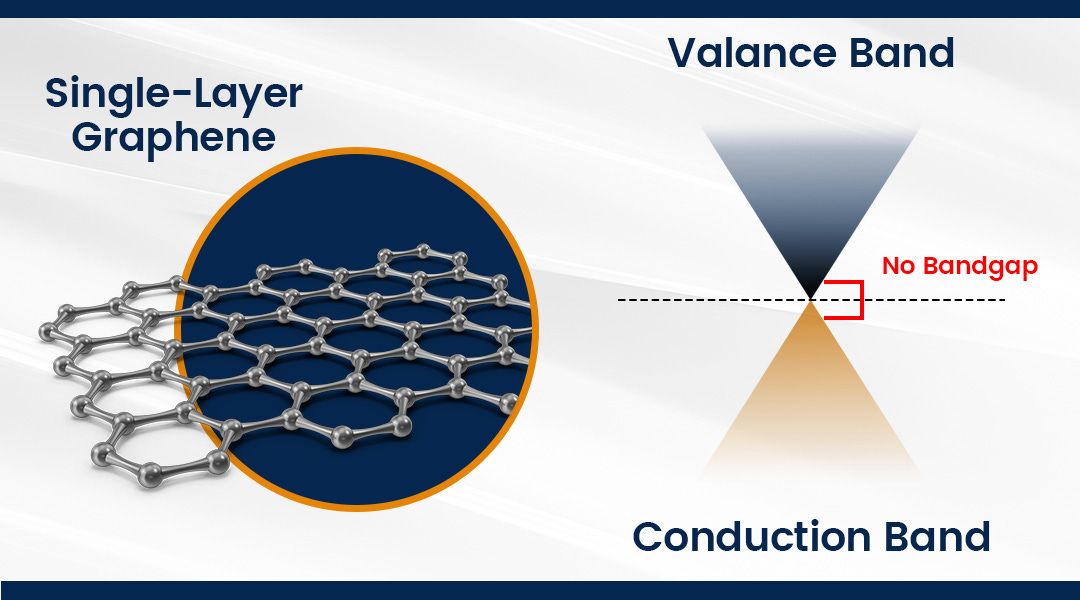
Graphene - a one atom-thick sheet of carbon - offers 10x the performance of silicon in terms of speed and energy efficiency. Graphene’s electron mobility is more than 200 times faster than silicon. Crucially, it conducts electricity with almost zero resistance, can operate at terahertz frequencies, and could be a saviour in a world where Moore’s Law is stalling.
It is recognized that graphene has almost unbridled potential within a semiconductor context. Industry analysts at McKinsey estimate that by 2030 the annual market for graphene-based semiconductors will have exceeded $70 billion.
The key question has always been scalability. That’s where Paragraf1, a private UK-based company headquartered in Cambridgeshire, enters the scene. (If you want to invest, see the footnote).
Paragraf is the first company in the world to mass-produce graphene electronics using a contamination-free method that aligns with standard semiconductor manufacturing. Unlike many research-lab graphene processes that require exotic methods, Paragraf uses Metal Organic Chemical Vapor Deposition (MOCVD) to deposit high-purity graphene on a wafer - without needing to transfer the material, which is where defects usually creep in.

Paragraf has partnered with top academic institutions like the University of Cambridge and secured significant funding from UK innovation bodies to push commercialization forward, and it has achieved some notable breakthroughs:
Graphene Hall Effect Sensors can detect magnetic fields from microtesla to 30 teslas, even at ultra-low temperatures, making them ideal for quantum computing environments where magnetic interference must be minimized.
Graphene Field-Effect Transistors (GFETs) can be customized for use in healthcare, chemical sensing, and environmental monitoring.
Paragraf's graphene devices can bond to silicon carbide, allowing them to be used in power electronics and extreme environments, from satellites to quantum labs.

The Silicon Future: Disrupted or Diversified?
Despite quantum computing and graphene’s potential, silicon isn’t disappearing anytime soon. Most computing tasks - ranging from smartphones to vehicular sensors - will still depend on silicon-based systems for a while to come.
Quantum will likely handle rare, complex problems. At the cutting edge of technology, graphene could replace silicon at the heart of the chip. However, much of the ecosystem - software, design tools, support processors - will remain based on current architectures for years to come.
Companies like ASML, which produce the ultra-precise photolithography tools essential for silicon chipmaking, are not just safe, they're thriving. With geopolitical pressure to build more fabs outside of Taiwan and relentless demand from AI and hyperscale data centers, ASML is struggling to meet global demand.
Even if graphene goes mainstream, ASML could adapt to manufacture the new generation of chips, especially since current graphene designs still rely on lithography.
Companies like Paragraf are proving that advanced materials like graphene can move from lab curiosity to commercial product. If their roadmap continues as planned, the UK could become a central player in the next era of semiconductor innovation. More likely would be a U.S. acquisition of Paragraf which would see graphene move to silicon valley - perhaps requiring a name change to graphene valley!
Ultimately, the future of computing isn't about replacement - it's about diversification - combinations of technologies. That future is being built today.
What’s Your View?
Whether you agree or disagree with the sentiment of this post, I’d love to hear from you:
Let’s turn this forum into a community for debating ideas and sharing our investment hypotheses.

Paragraf (https://www.paragraf.com) is a private company, but it does have listed venture capital backing. This means that if you want exposure to Paragraf, investing in one of these listed VCs is the answer. Molten Ventures (London: GROW) is one such listed VC - (https://investors.moltenventures.com/investor-relations/plc)
Helpful insights James, thank you. I do believe ASML's machines can pivot to printing on graphene-based chips as their lithography technology is simply projecting light on a wafer to create a design. Whether its on silicon or other materials I believe its just a matter of pivoting slightly. However, this is a good question for ASML management as it falls into more technical and operating considerations. The other thing I am thinking about is the magnitude of scale you mention for these graphene-based chips. How many chips is Paragraf producing per year? I have learned that most new technologies in this industry fail due to lack of sufficient scale and/or not ensuring the necessary raw materials or suppliers.
Silicon wafers will continue to have an important share of chips in the future. Whether its for the most dense / smaller parts of the chip or the more coarse parts. Silicon is readily available, cheap, and easy to manipulate so it will be hard to substitute as the material used to layer on the wafer.
I agree that EUV is reaching its Moore's law limit and that only TSMC as a client is keeping up with the amount of innovation that ASML is generating. However, this shines light on DUV which is still a great business for ASML and is used for the top layers of chip-making (recall that chips are a mesh of several layers of transistors, much like a skyscraper, and that the most dense/small layers are the bottom floors while the simpler layers are the top ones). While the lower levels will require EUV for the higher precision, the top layers can be made with DUV, so this could be a case for slower growth for EUV and higher growth for DUV. In addition, if ASML ends up selling less EUV machines this may also lead to clients upgrading their old lithography machines instead of buying new ones. ASML has a robust upgrade and maintenance business that actually has higher margins than new equipment sales. So what I am getting to is that there may well be slower growth in ASML's EUV business for various reasons but that may not necessarily hurt the company's intrinsic value as it may be compensated by ASML's other lines of business including DUV and upgrade/maintenance.